
Chinatown - International District
Demographics
Chinatown - International district, often abbreviated to CID, is a neighborhood in Downtown Seattle, originally established in the 1800s when Chinese immigrants settled. The community was displaced twice, once from The Great Seattle Fire in 1889 and once from the Jackson Regrade Project where the city removed which flattened a hill in the city where CID was located. The district is made up of three sub-neighborhoods; Chinatown, Japantown, and Little Saigon. The district is primarily made up of Chinese, Japanese, and Vietnamese immigrants. The district has a long history of mistreatment from the Chinese Exclusion Act to the internment of Japanese Americans to consistent gentrification. Even so, the Chinatown - International District has managed to thrive through vibrant community efforts celebrating the many various cultures found within the neighborhood!
Chinatown has strong assets that help the community stay connected and preserve its cultural identity. Family-owned restaurants, community organizations, and cultural events keep traditions alive and create a welcoming environment. Public spaces—like parks where people gather, play chess, or listen to music—also strengthen social bonds and make the neighborhood feel vibrant. At the same time, Chinatown faces important barriers. Aging buildings, business closures, and signs of economic struggle show the impact of underinvestment and development pressure. Gentrification and nearby large developments have historically displaced residents and threatened small businesses. Issues like visible garbage and crowded streets also add stress to the neighborhood’s environment. Even with these challenges, the community continues to support each other and maintain cultural continuity.
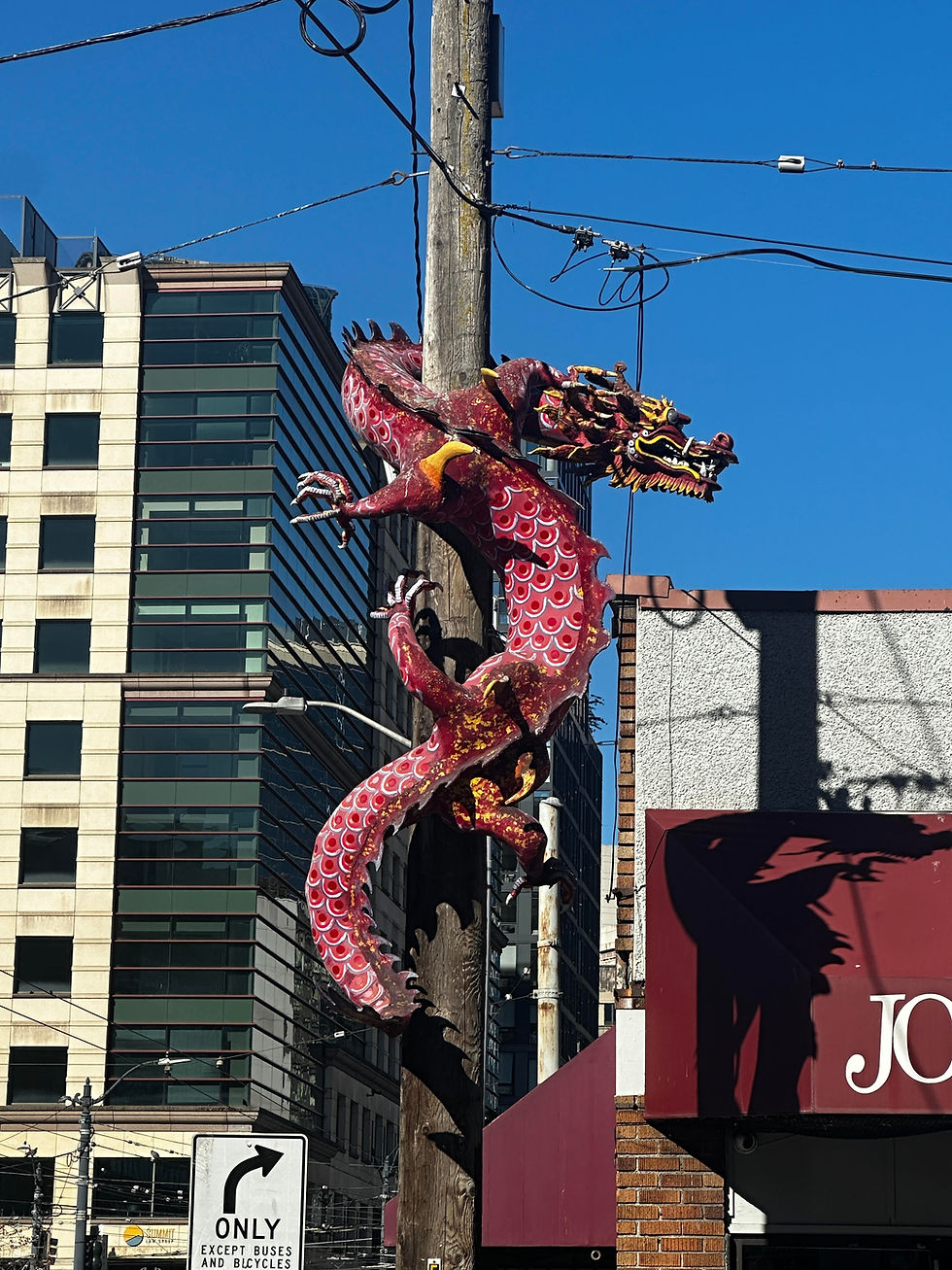
63.5%
BIPOC residents in this area
29.6%
Population below poverty level vs. 10.0% Citywide
$39,171
Median household income vs Citywide $105,391
Observations


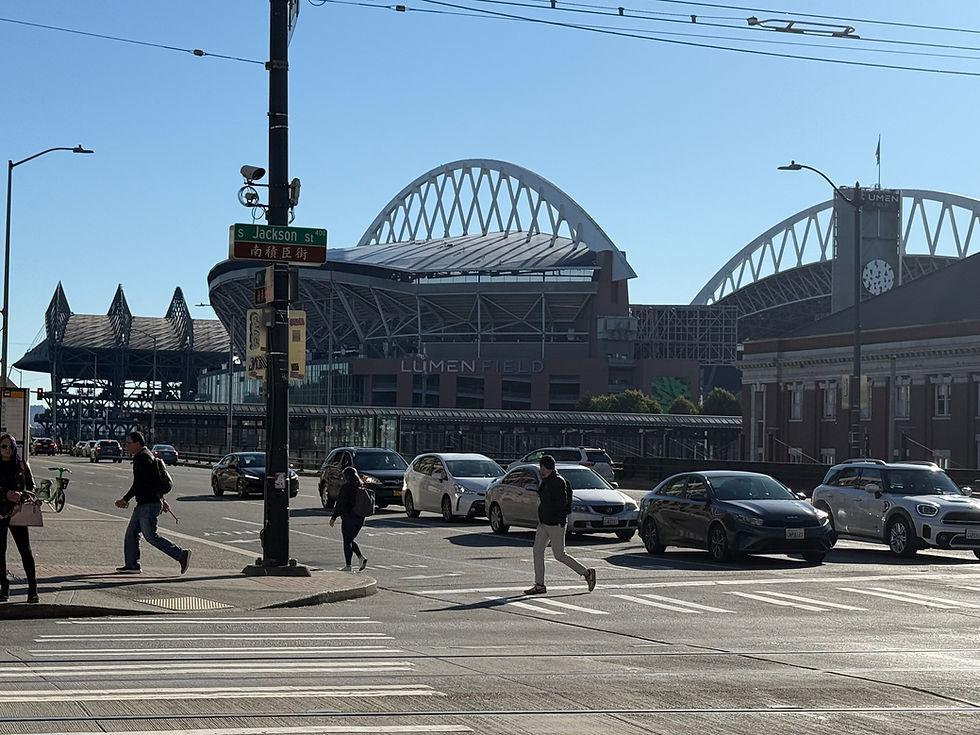

We observed the vibrant multicultural community full of historical significance. The population here is mostly Asian-American, and this fact is reflected through the cultural architecture and Asian restaurants and markets. There was also a mural to highlight Asian American immigrants affected by the Chinese Exclusion Act. Signs displayed the slogan "Never Again is Now," which works to acknowledge the past incarceration of Asian American immigrants who were discriminated against because of their ancestry, and it is a warning to continue to advocate for these people and fight the racism deeply imbedded in this community.
Multicultural Community
1
Although we observed the cultural vibrancy of the CID and met some incredible people, we noticed that many of the businesses and establishments were closed, and there was a lack of people walking around. This stems from the gentrification, rising rent, and redevelopment pressures that are prevalent in this area and are forcing multigenerational businesses to have to shut down.
Deserted Streets and Closed Businesses
2
We observed the I-5 highway that cuts through the center of Chinatown, as well as the stadium that was built right next to this area, which are examples of gentrification. These infrastructure projects displaced residents and businesses and caused division within the community. Further, due to this increase in traffic, the air quality has been severely affected and has created an unsafe environment for many people.
Highway and Stadium Infrastructural Projects
3
We observed a strong community upon our exploration of the town and met some very kind people. In the main city park, we observed beautiful architecture and chess games, and we listened to a saxophone player playing in the park in hopes of fostering a sense of connection and community. We visited the community garden and saw the effort put into making it a beautiful place, and there were many opportunities to volunteer in the garden or in other locations.
Community Strength
4
FINAL SCORE
2.875/5
Overall, we gave the International District a score of 2.875/5 based on the collective scores gathered based on each topic. International District was scored a 2 for climate, geography, and ecology because most of the entities that were determined were barriers to the community (natural hazard risks, transportation access, and microclimates). For the population health topic of gentrification, International District scored a 1 because the entities (Route I-5, Kingdome/Lumen Field, Luxury condos) were all barriers to the community, causing harm by displacing people, families, and small businesses. When it came to race, ethnicity, and culture, the district got a 3.5 because while most of the entities identified (strong cultural identity, community networks, preservation of heritage, risk of displacement, language barriers, declining safety)were assets that supported belonging and cultural continuity, there were still some entities that limited community stability and access to cultural spaces. Finally, International District scored a 5 on the population health topic of Community and Social Connectedness because all the entities (meeting spaces, public parks, social events, and community centers) were assets that helped work to improve the wellbeing of the people living in the community along with the community itself. Looking into the interrelationships of these topics, we see a lot of overlap. Specifically, within the community topic and race & culture topic, the multicultural community of the CID creates issues such as discrimination and Anti-Asian hate, but through shared experience and connection, many of the residents here can find belonging and be empowered. There is a strong sense of cultural identity here, and community events and programs work to empower these people despite hardships and work to fight against discrimination and displacement. As for the topic of climate and the topic of gentrification, there is a clear link between the infrastructural projects that include the highway and the stadium with the increased level of air pollution. With all of these topics overlapping, we must fight against discrimination, displacement, and health conditions caused by pollution by focusing on community building and activism in order to build a common sense of identity and work against systemic structures that have undermined this community.
RACE, ETHNICITY, & CULTURE - 3.5/5
Briana Vaca Garibay
Chinatown and the remaining parts of Japantown are strong cultural assets because they preserve Chinese and Japanese heritage through community centers, festivals, small family-owned businesses, and long-standing social networks. These neighborhoods create a strong sense of belonging for immigrants, elders, and multilingual families, helping maintain cultural identity and community resilience despite ongoing change .
A major barrier in Chinatown and the remaining parts of Japantown is the growing risk of cultural displacement. Rising rents and redevelopment pressures have forced many long-standing Asian-owned shops, cultural centers, and multigenerational businesses to close, weakening community identity. Many elders in both Chinese and Japanese communities also face significant language barriers, which limits their ability to access healthcare, city services, and mental health support. Additionally, concerns about public safety and reduced foot traffic have made residents feel less secure participating in cultural events or gathering in community spaces, further disrupting cultural continuity.
I rated this population health topic a 3.5 because the neighborhood has a strong cultural identity, community network, and preservation of Chinese and Japanese heritage, however the growing risks of displacement, language barriers, and declining safety significantly limit community stability and access to cultural spaces.
CLIMATE & GEOGRAPHY - 2/5
Lily Poletto
My individual population health topic is geography, ecology, and climate.
These topics are related to public health through things like air quality, extreme heat, rising sea level, climate change, and many other things, all of which can have a heavy impact on the community. With regard to the International District, there is a medium level of risk for extreme heat, sea level rising + coastal flooding, and urban flooding. Along with a low risk for landslides and smoke. Also according to this source, "areas with the highest relative health vulnerability to climate change are in the Duwamish Valley, International District/Chinatown, and Rainier Valley."
The entities I chose for this topic are transportation access, natural hazard risks, and microclimates. I chose these entities because I believe that they all speak to parts of my topic. I would argue that transportation access is both a barrier and an asset, leaning more towards an asset, because even though transportation accessibility can lead to climate/air pollution, it is also an asset to the community because access helps bring people together. However, both natural risks and microclimates would both be barriers to the community because, obviously, natural hazard risks can cause loss of life, injury, permanent damage, things like that. All of which negatively affect the community.
Overall, I scored the International District as a 2 because most of the entities (natural hazard risks, transportation access, and microclimates) are barriers to the community.
COMMUNITY & SOCIAL CONNECTEDNESS - 5/5
Abby Thorson
The population health topic that I chose was community & social connectedness. This topic relates to population health because happiness and well-being often stem from secure relationships and connections, and a strong community will seek out injustices faced by its members. The CID has faced institutional racism that has been rooted in this decade for years because of its multicultural population, with a rise in anti-Asian hate crimes and violence recently due to the COVID-19 pandemic. Initial research allowed me to explore how, despite these pressures and this violence, the community has been strengthened through the Visionary Advisory Group and a Neighborhood Strategic Plan to outline goals for the community. When visiting, I focused on the entities of meeting spaces, public parks, social events, and community centers, which I considered all entities, as they worked to improve the wellbeing of all community members. I scored my topic a 5/5, as the easily accessible and free resources for all members, such as volunteerism and community events, worked to foster an inclusive environment of shared experiences. The vibrant community with music in the park, chess competitions, a thriving community garden, and kind people all highlighted an effort to built connections despite adversities.
GENTRIFICATION - 1/5
Ilona Skarzynski
The population health topic I chose is gentrification. Gentrification relates to population health because of how poverty and displacement of both people and communities affects people's and communities' health. Gentrification is disproportionately represented among different demographics. The CID is currently struggling with the effects of previous and ongoing gentrification. The entities I identified for this topic are the following; Route I-5, the Kingdome/Lumen Field, and luxury condos. I observed these entities during my tour. These entities matched my initial research that they are barriers to the neighborhood which have all caused the community harm by displacing people, families, and local businesses. Since all the entities in my population health topic are barriers, I rate my topic of Gentrification as 1.